
Electric Vehicles in 2025: The Numbers Have Finally Changed Everything
Range anxiety was real. Charging infrastructure was a joke. Prices were premium. Three years ago. Today, EV ownership has crossed a genuine tipping point.
TL;DR — Key Takeaways
- •Battery costs fell 90% over the last decade — another 14% drop just last year
- •Modern EVs deliver 300+ miles of range; fast chargers reach 80% in under 20 minutes
- •Purchase price parity achieved for many segments; $6,000 average savings over 5 years
- •Grid getting cleaner annually; EVs produce fewer lifecycle emissions in nearly every country
- •Solid-state batteries arriving 2028–2030; vehicle-to-grid tech rolling out now
I drove a rental EV for two weeks across three cities last month. I charged it twice. Both times took under 20 minutes. The range was 340 miles. The car cost less to rent than a comparable petrol vehicle. I didn't think about any of this until I'm writing it now — which is exactly the point.
Electric vehicles have stopped being a statement and started being a practical choice.
What Actually Changed
Battery energy density has improved dramatically. The packs that gave 150 miles of range five years ago now deliver 300+ at similar size and cost. Manufacturing scale drove prices down — battery costs fell 90% over the last decade and dropped another 14% just last year.
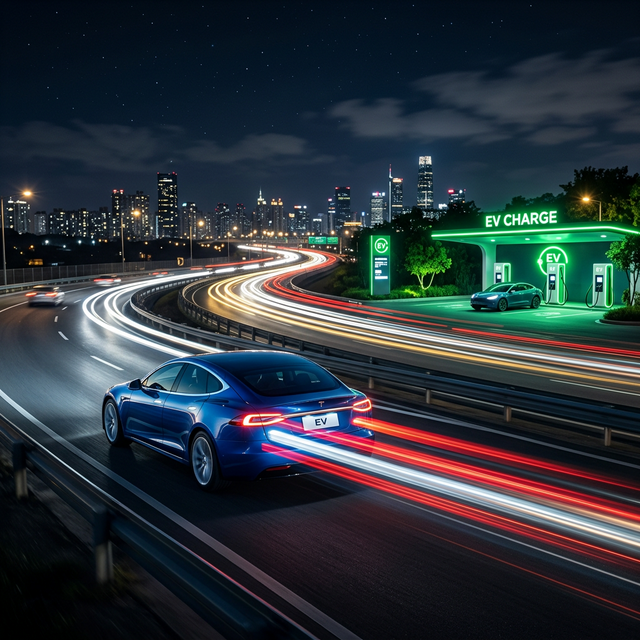
Charging infrastructure finally got serious. Major highways in the US and Europe now have fast chargers every 50 miles on average. Tesla's Supercharger network opened to other brands. New stations charge to 80% in under 20 minutes for most modern EVs. The charging anxiety people felt in 2020 is genuinely obsolete for typical drivers.
EV Key Statistics (2025)
The Ownership Math
Purchase price parity is here for many segments. A mid-range family EV now costs roughly the same as an equivalent petrol vehicle before fuel and maintenance savings. Over five years of ownership, EVs cost significantly less — electricity is cheaper than petrol per mile, EVs have far fewer mechanical parts to service, no oil changes, no transmission work.
A study tracking 50,000 EV owners found average fuel and maintenance savings of $6,000 over five years compared to equivalent petrol vehicles. That's just money back in your pocket.
EV vs Petrol: 5-Year Cost Comparison
| Cost Factor | EV | Petrol |
|---|---|---|
| Purchase Price | Parity ✓ | Baseline |
| Fuel / Energy (5yr) | ~$3,000 | ~$7,500 |
| Maintenance (5yr) | ~$1,500 | ~$3,000 |
| Total Savings | ~$6,000 saved over 5 years | |
The Grid Reality
The common objection is "you're just burning coal somewhere else." This was partially true and is rapidly becoming less so. The electricity grid is getting cleaner every year as renewables expand. Even charged on today's average grid mix, EVs produce fewer lifecycle emissions than petrol vehicles in nearly every country.
Home charging with solar panels — increasingly common — makes the environmental calculation very lopsided in EVs' favour.
📖 Related Deep Dive
For more on how renewable energy is transforming the grid, read: 5G Is Everywhere Now — Here's What That Actually Means for You
What's Still Honest Limitation
Long road trips still require planning if you're not near fast-charging corridors. Apartment dwellers without dedicated parking face real challenges. Extreme cold weather reduces range meaningfully — 20-30% in very cold climates. These are real limitations, not dealbreakers for most, but genuine factors for some buyers.
Where We're Heading
Solid-state batteries are 3-5 years from widespread deployment and promise another step-change: faster charging, more range, longer lifespan, better cold weather performance. Vehicle-to-grid technology — using your car as a home battery — is rolling out in select markets and could fundamentally change how households manage electricity.
The tipping point has happened. The question is no longer if EVs become mainstream, but how quickly.
Frequently Asked Questions
How far can electric vehicles go on a single charge in 2025?
How long does it take to charge an EV at a fast charger?
Are electric vehicles cheaper to own than petrol cars?
Do electric vehicles work well in cold weather?
What are solid-state batteries and when will they arrive?
TechPulse Editorial Team
Senior technology writers covering electric vehicles, renewable energy, and emerging tech. Our reporting is based on direct experience, manufacturer data, and peer-reviewed research. Learn more about our team →